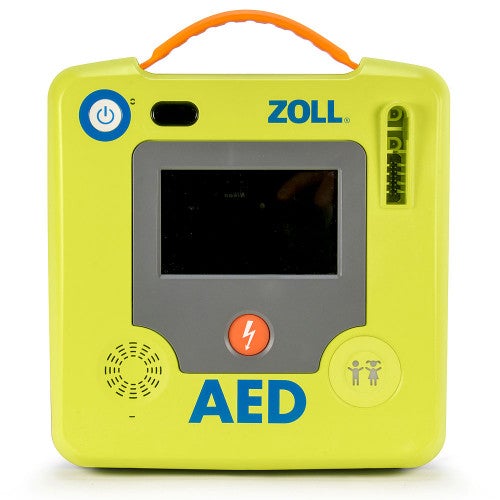
Q: What is an AED?
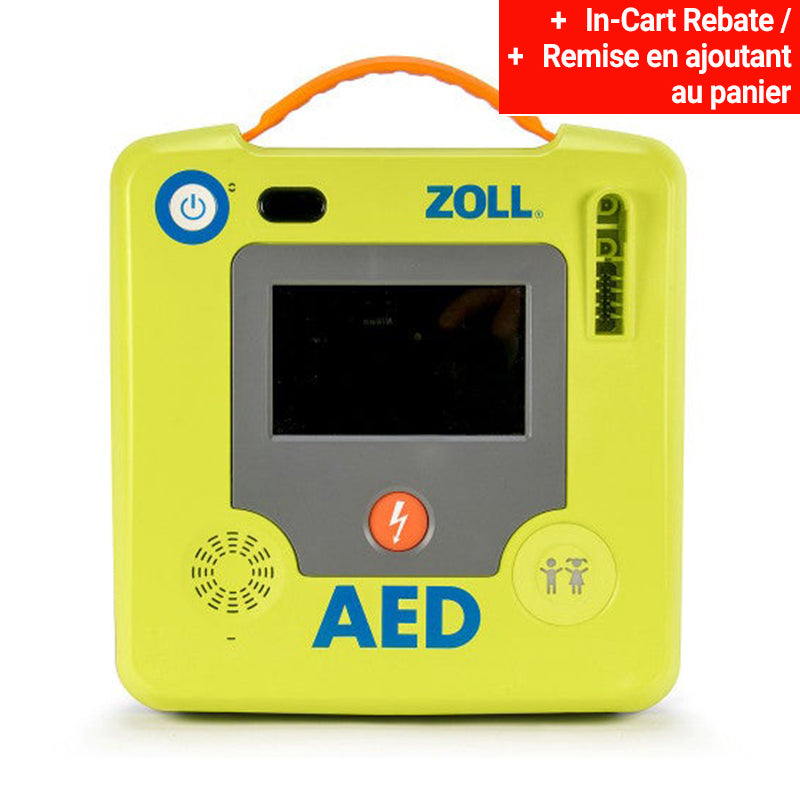
A: An automated external defibrillator is a device that analyzes the heart rhythm, determines if a shock is needed, and delivers a shock when appropriate to treat certain life-threatening rhythms.
Q: Who is the ZOLL AED 3 designed for?
A: The ZOLL AED 3 is designed for workplaces, schools, public facilities, and community settings where both trained and untrained rescuers may need to respond quickly to sudden cardiac arrest.
Q: How does Real CPR Help technology assist rescuers?
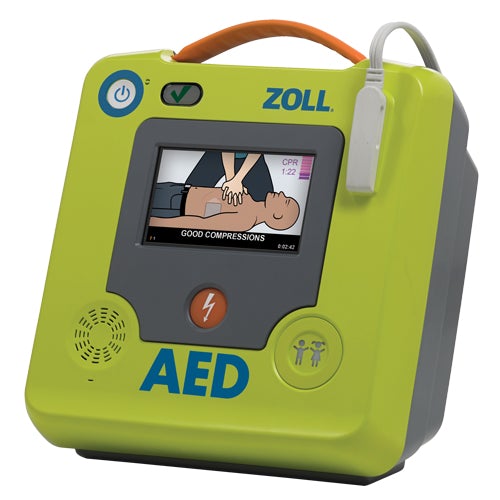
A: Real CPR Help provides real-time audio and visual feedback on compression rate and depth, helping rescuers deliver high-quality CPR that aligns with current resuscitation guidelines.
Q: Can the ZOLL AED 3 be used on children?
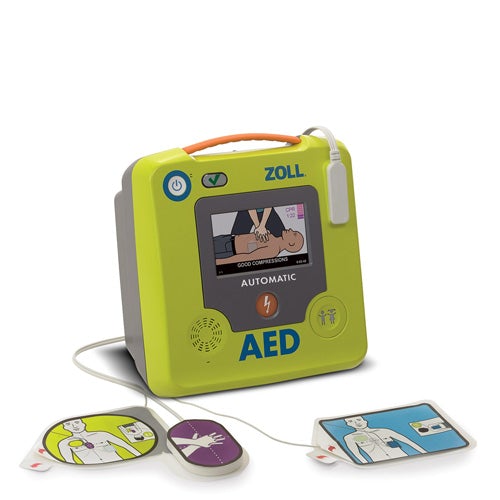
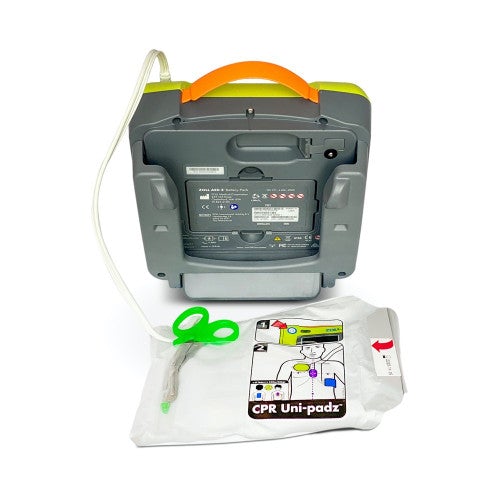
A: Yes, the universal CPR Uni-padz work for both adults and children; simply activate child mode to adjust prompts and therapy for pediatric patients.
Q: How long do the battery and electrode pads last?
A: The smart battery and universal CPR Uni-padz electrodes are designed with a 5-year shelf life, reducing replacement frequency and overall cost of ownership.
Q: How will I know if the ZOLL AED 3 is ready to use?
A: The device performs automatic self-tests and uses a status indicator window to show readiness, so you can quickly confirm the AED is rescue-ready at a glance.
Q: What connectivity options does the ZOLL AED 3 offer?
A: Built-in WiFi allows the AED 3 to connect with AED program management solutions like PlusTrac, enabling remote status monitoring, consumable tracking, and compliance management.
Q: Is the ZOLL AED 3 easy to operate in an emergency?
A: Yes, it features a high-resolution color display with clear rescue images, voice prompts, and a CPR metronome to guide rescuers step by step from pad placement through shock delivery and CPR.
Q: How durable is the ZOLL AED 3?
A: The ZOLL AED 3 has a rugged design tested for drops and carries an IP55 rating for dust and water protection, making it suitable for demanding environments.
Q: What happens after a rescue event?
A: Event data can be downloaded for review and quality improvement using solutions such as RescueNet Event Summary, supporting post-event analysis and documentation.
Q: What is sudden cardiac arrest (SCA)?
A: Sudden cardiac arrest is when the heart unexpectedly and abruptly stops beating, most often due to an abnormal heart rhythm called ventricular fibrillation (VF).
Q: Is SCA the same as a heart attack?
A: No; a heart attack is caused by a blocked blood supply to the heart muscle and the person is usually conscious, while SCA stops the heart’s pumping suddenly and is quickly fatal if not treated.
Q: Who is at risk for sudden cardiac arrest?
A: While the average SCA victim is around 65 years old, SCA is unpredictable and can strike anyone, anywhere, at any time.
Q: What is ventricular fibrillation (VF)?
A: VF is a chaotic, very fast heart rhythm that causes the heart to quiver instead of pumping effectively and will quickly deteriorate to a flat line if not treated.
Q: How is VF treated?
A: The only effective treatment for VF is an electrical shock called defibrillation, delivered by an AED to stop the abnormal rhythm and allow the heart’s normal rhythm to resume.
Q: How does Real CPR Help technology assist rescuers?
A: Real CPR Help provides real-time audio and visual feedback on compression rate and depth, helping rescuers deliver high-quality CPR that aligns with current resuscitation guidelines.
Q: Will I hurt the victim by using an AED?
A: When used on someone who is unresponsive and not breathing, AEDs are considered safe and the chance of harm is far outweighed by the chance of saving the person’s life.
Q: Should I perform CPR first or apply the AED pads?
A: Start CPR immediately, then apply the AED pads as soon as the device is available and follow its voice and screen prompts, including when to pause and resume compressions.
Q: If defibrillation is so important, why do CPR as well?
A: CPR keeps some oxygen-rich blood flowing to the brain and heart, buying time and making the heart more likely to respond to a defibrillation shock.
Q: Can I accidentally shock another rescuer or myself?
A: AEDs are very safe when used correctly; ensure no one is touching the victim and verbally warn others to “stand clear” before delivering a shock.
Q: Can I use an AED on someone with a pacemaker or who is pregnant?
A: Yes, AED use should not be withheld from someone in suspected sudden cardiac arrest, even if they have a pacemaker or are pregnant.
Q: Can I defibrillate on a wet or metal surface?
A: Yes, as long as the victim’s chest is dried, the pads are not in contact with water or metal, and no one is touching the victim during shock delivery.
Q: Do I need to remove the electrode pads before performing CPR?
A: No; the pads stay in place throughout the resuscitation and will not interfere with proper hand placement for chest compressions when applied correctly.
Q: Why must the pads be firmly adhered to a clean, dry chest?
A: Good pad contact allows the shock to travel through the chest between the pads; sweat, hair, or poor adhesion can reduce effectiveness and increase the chance of arcing.
Q: Is it okay to place pads on a very hairy chest?
A: Pads must contact the skin; if chest hair prevents adhesion, quickly remove or trim the hair where the pads will be placed, then apply fresh pads.
Q: What if I’m not sure whether I should use an AED?
A: Use an AED on anyone who is unresponsive and not breathing normally—the same person you would start CPR on—and follow the device prompts.